Ryan Royal Astrology
AKA KingRyanXL
My work with Saturn and
Mundane Culture
My research into Saturn and mundane culture began with a simple curiosity: could Saturn’s transit through the zodiac correspond with observable patterns in popular music? I had been introduced to the idea that songs seemed to reflect the symbolism associated with the zodiac sign Saturn occupied when they were released. Santeria by Sublime, for example, was released while Saturn was in the sign of Aries—a Mars-ruled sign traditionally associated with aggression and confrontation—and centers around a narrator fantasizing about violence toward his romantic rival. I wanted to know whether observations like this were merely anecdotal or whether something larger could be measured.
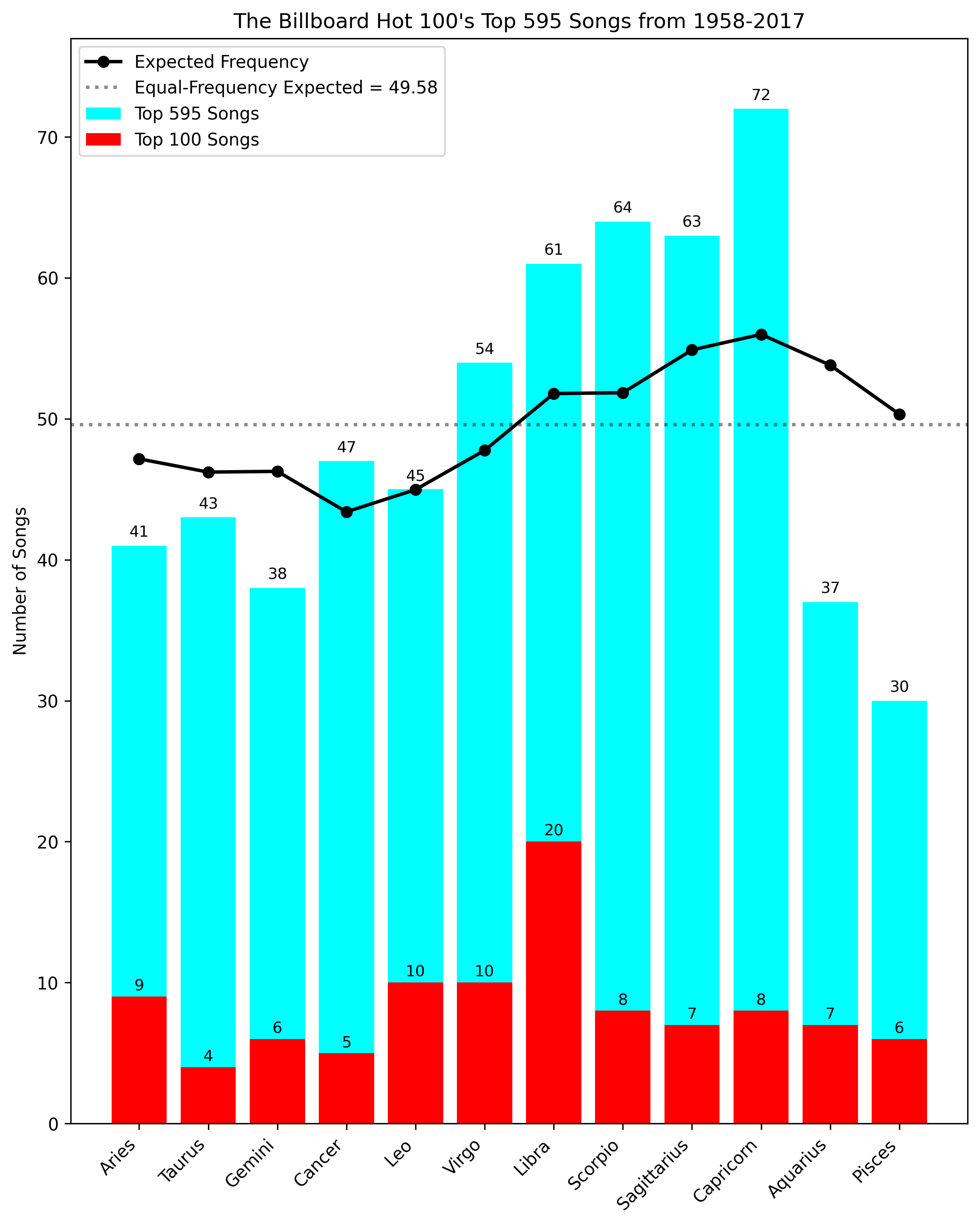
I began by categorizing Billboard’s all-time Hot 100 rankings according to Saturn’s sign at the time each song was originally released. An unexpected pattern emerged. Twenty of the Top 100 songs were released while Saturn was in the sign Libra, the sign of Saturn’s traditional exaltation, compared with 62 across the broader dataset. At the opposite end, only 30 songs in the final 595-song study were released while Saturn was in the sign Pisces.
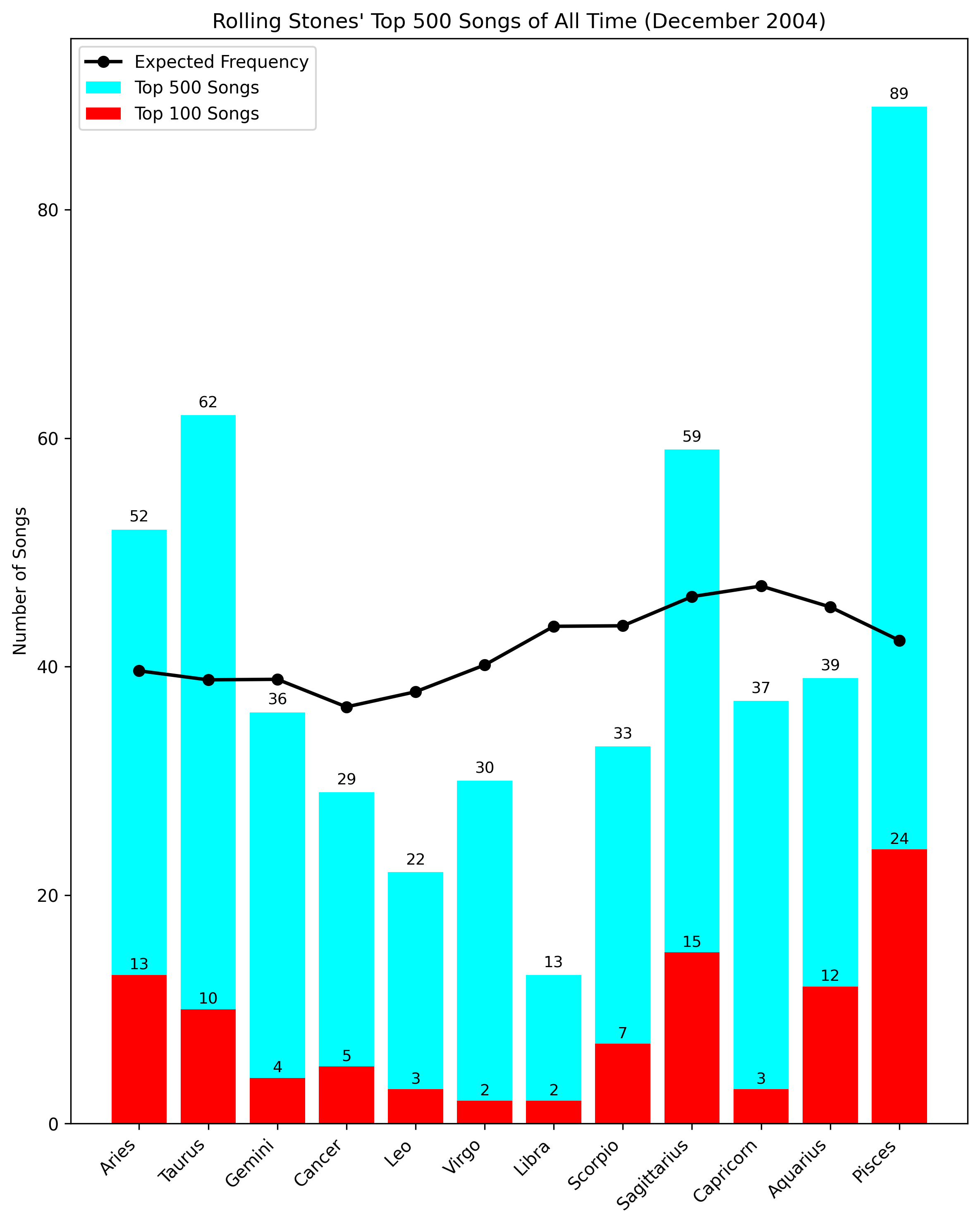
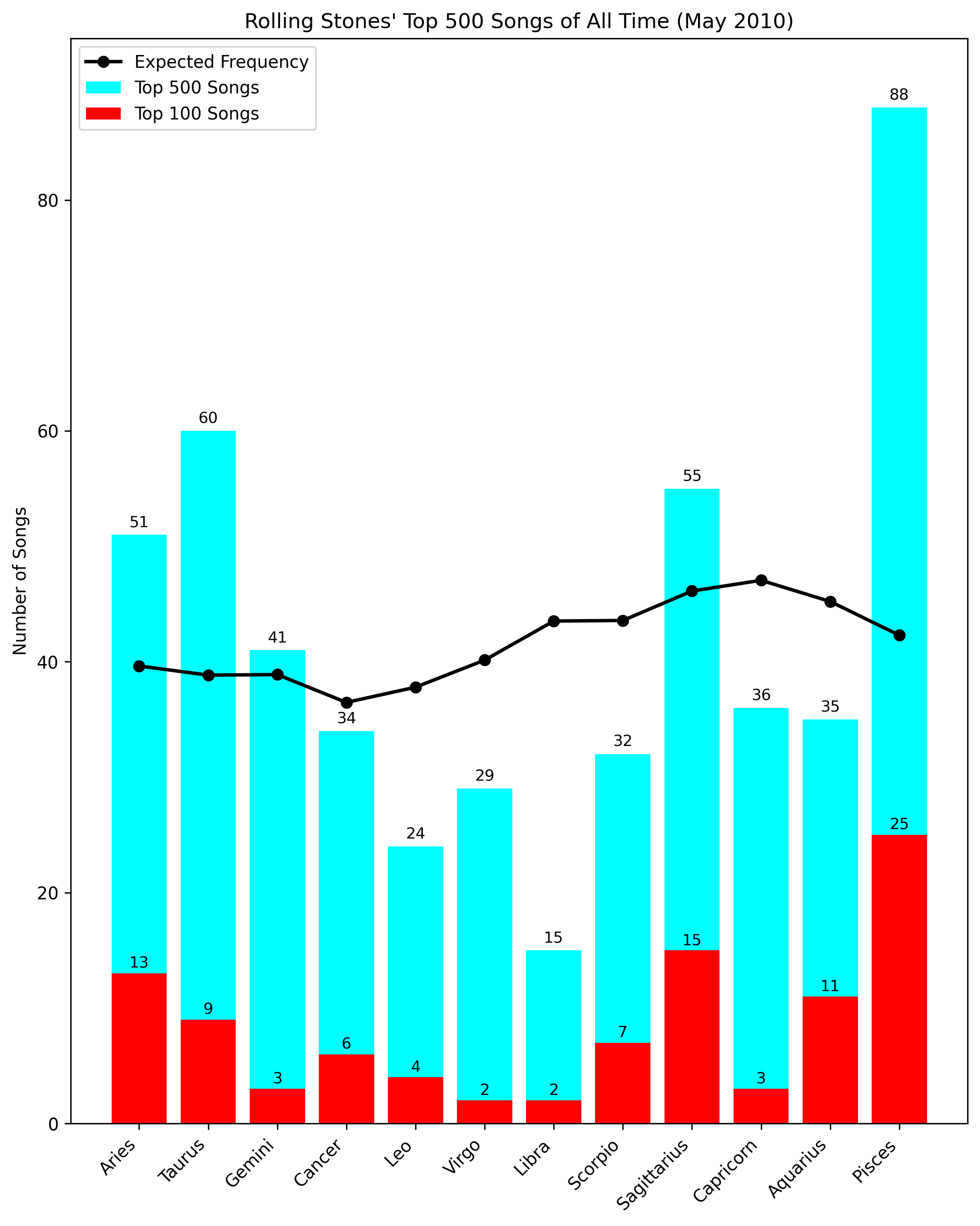
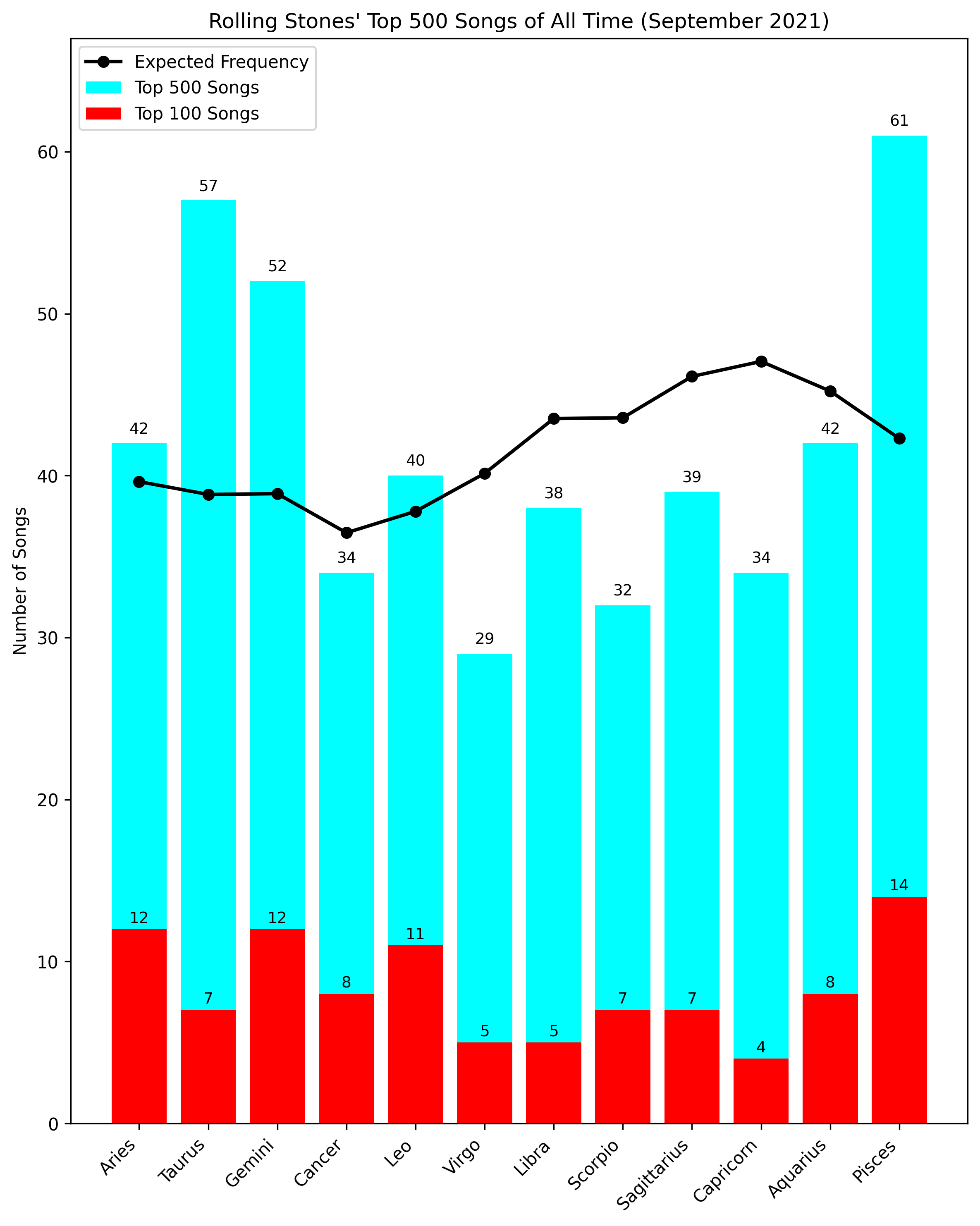
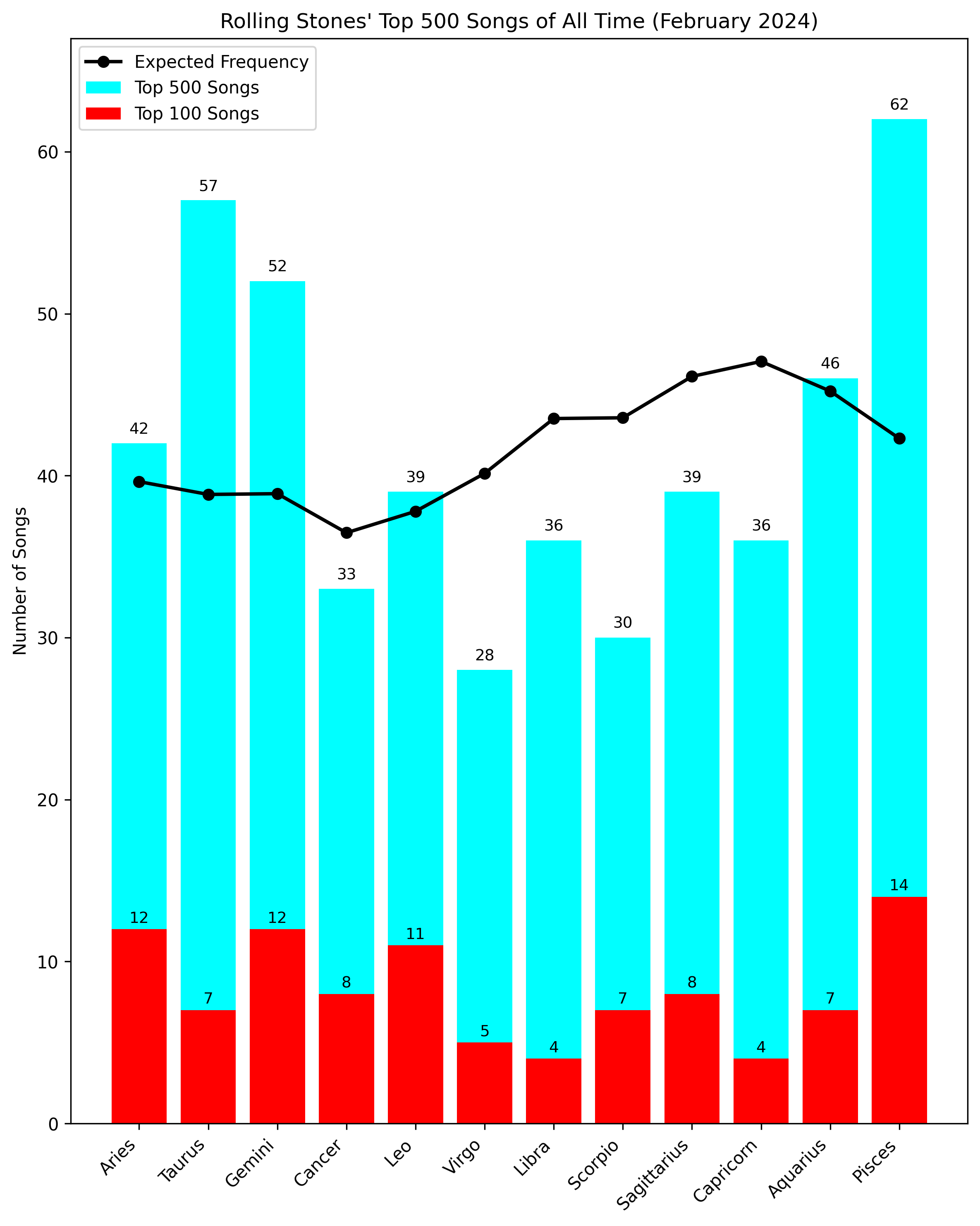
That result led me to examine retrospective rankings as well. When I categorized each of the four editions of Rolling Stone’s 500 Greatest Songs of All Time, I found an opposite result. The 2004 list, for example, contained only 13 songs from when Saturn was in Libra but 89 from when Saturn was in Pisces. The contrast fascinated me: Billboard’s ranking was built from commercial chart performance in real time, while Rolling Stone was attempting to evaluate music retrospectively through cultural and critical significance.
What began as a curious experiment about music consequently became a much larger investigation: if different Saturn periods repeatedly correspond with measurable differences in the kinds of music society produces, rewards, remembers, and canonizes, what might that tell us about the relationship between planetary cycles and collective human behavior?
That question has become the foundation of my ongoing research into Saturn, culture, and the patterns through which societies express themselves over time.
If you or a publisher you know would like to get in contact with me about getting my work published, please contact me below.
The Additional Qualities
of the Zodiac Signs
After finding a statistically significant relationship between Saturn’s zodiacal position and the distribution of commercially successful songs, I wanted to know whether the signs could actually be heard in the music itself. My approach became similar in spirit to the way ancient philosophers attempted to understand matter through its observable qualities: rather than beginning with a predetermined musical definition for each sign, I began listening for recurring differences between Saturn periods.
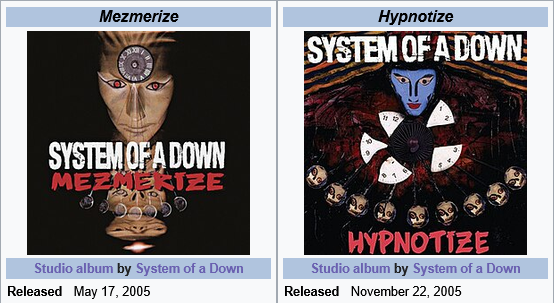
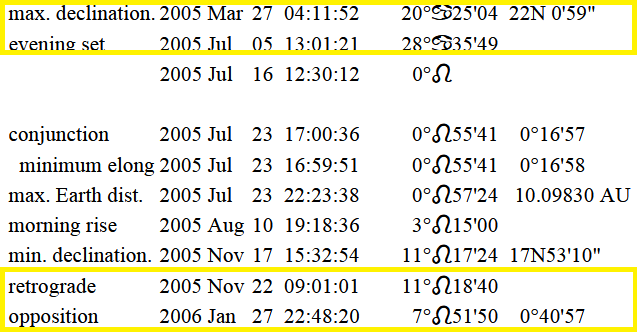
One of the first contrasts that caught my attention was the transition from Saturn in Cancer to Saturn in Leo. Music from the Cancer period often struck me as harder, messier, and more chaotic, particularly within rock, while music released after Saturn entered Leo frequently sounded smoother, cleaner, and more controlled. System of a Down provided an unusually useful comparison. Their album Mezmerize was released with Saturn in Cancer, while Hypnotize arrived only six months later with Saturn in Leo. Both debuted at No. 1, yet to my ear the two albums demonstrate a noticeable shift in texture despite coming from the same band, during the same year, as parts of the same two-album project.
Data extracted from: https://www.astro.com/swisseph/ae/saturn1600.pdf
That observation initially led me to associate the water signs with a wetter, messier texture and the fire signs with a drier, cleaner one. But the elemental model alone quickly became insufficient. Saturn in Leo did not sound identical to Saturn in Aries or Sagittarius. Aries seemed noticeably messier than Leo, while Sagittarius often placed greater emphasis on atmosphere and spaciousness. If all three were simply “fire,” something else had to be differentiating them.
This brought me back to the ancient elemental qualities. Empedocles had proposed the four roots that became known as fire, air, water, and earth. Aristotle later described these elements through combinations of hot, cold, wet, and dry: fire as hot and dry, air as hot and wet, water as cold and wet, and earth as cold and dry. Hotness is outwardly-expansive while coldness is inwardly contractive. Dryness is clearly-defined and separating, while wetness is blended and combining. These qualities later on would define the nature of the four different states of matter: plasma, gas, liquid, and solid. These same elemental qualities also became associated within later classical and medieval systems with the seasonal cycle in the northern hemisphere: spring with air because it is wet and becoming hot, summer with fire because it is hot and becoming dry, autumn with earth because it is dry and becoming cold, and winter with water because it is cold and becoming wet.
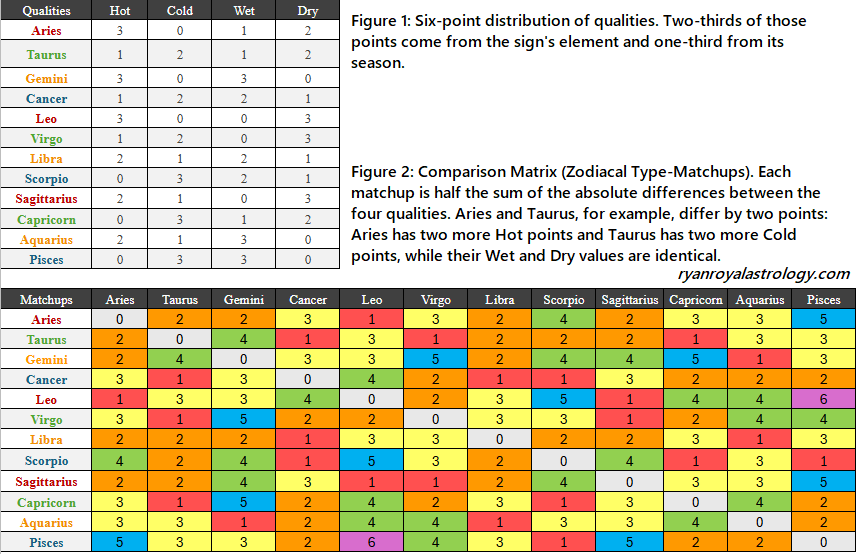
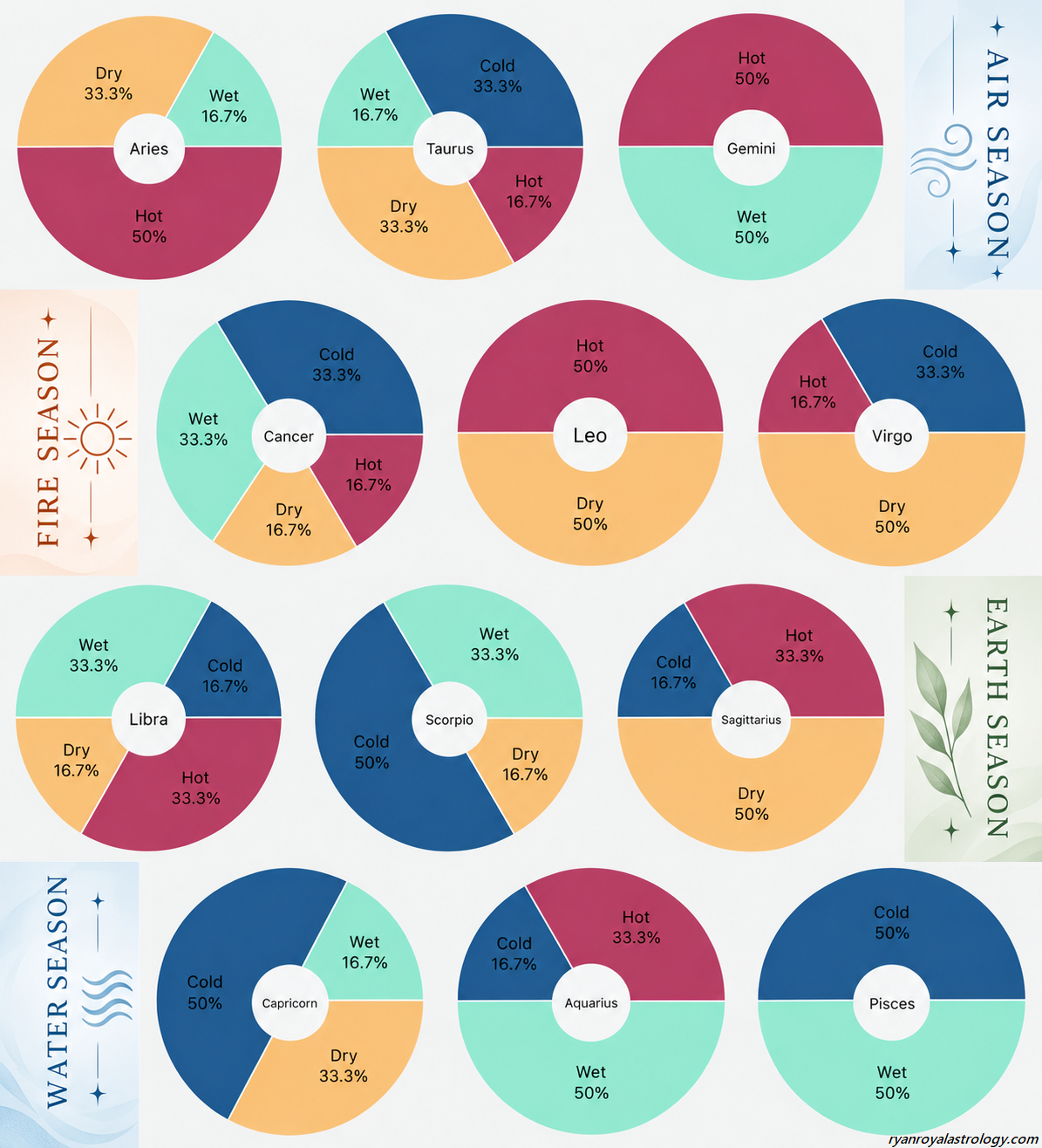
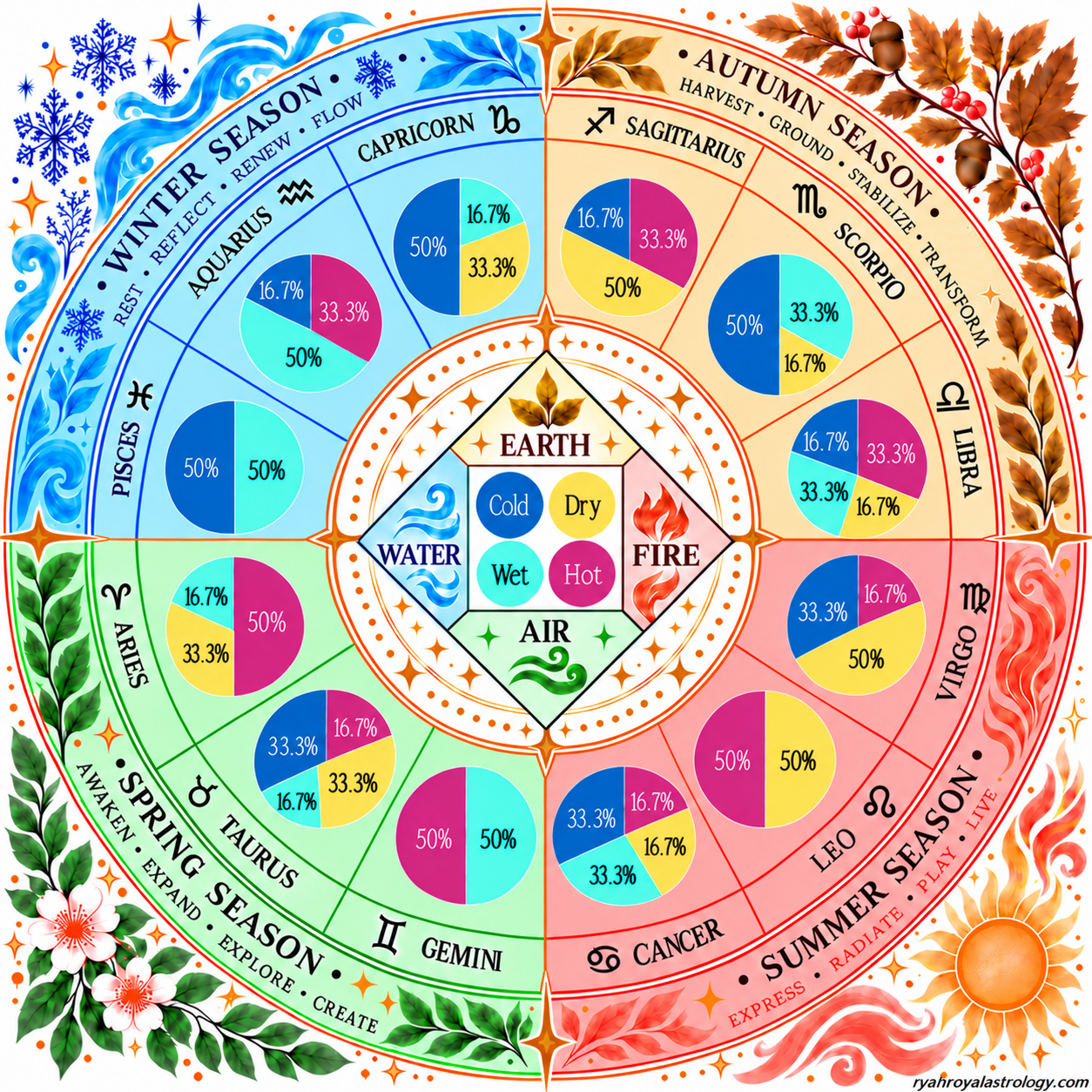
I began experimenting with the possibility that a zodiac sign might therefore carry not only the qualities of its element, but a secondary influence from the season in which it occurs. At first I weighted the two equally, but this produced signs that were too similar to one another. Capricorn and Scorpio, for example, would effectively become mirrors: an earth sign in the water season and a water sign in the earth season. Instead, I gave the zodiacal element twice the weight of the seasonal element. Each quality belonging to the sign’s element receives two points, while each quality belonging to its season receives one. Aries, for example, receives two Hot and two Dry points from fire, then one additional Hot and one Wet point from spring’s association with air. Its final distribution becomes three Hot, two Dry, and one Wet. Included in this section are pie charts containing the distribution
Listening through this framework produced distinctions that the four elements alone could not explain. The signs remained recognizably connected to their elemental families, but their seasonal qualities modified how those elements were expressed. Fire did not always sound equally dry; water did not always sound equally wet. What began as an attempt to describe musical texture ultimately gave me a new way of understanding why signs belonging to the same element can behave so differently from one another.
Using the six-point quality model shown above, I calculated the qualitative distance between every pair of zodiac signs. Each score represents how many of the six Hot, Cold, Wet, and Dry points would need to change for one sign’s quality profile to become another’s. The resulting matrix provides a theoretical scale for predicting how subtle or dramatic the musical transition between two Saturn signs should be.
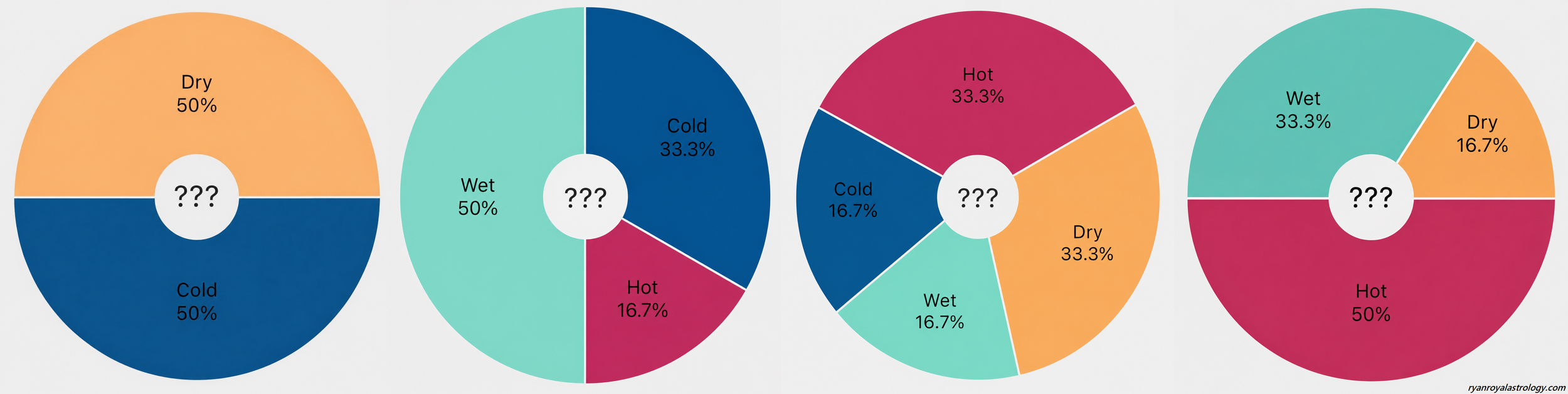
Some elemental and seasonal combinations are absent from the zodiac. With this model, they represent unstable states of equilibrium—conditions that naturally tend to transform into something else. Complete Cold and Dry cannot remain entirely static without some exchange of energy, appearing instead through Virgo’s movement and vibration or Capricorn’s slight moisture and condensation. Likewise, water cannot remain freely suspended in air: it either falls as rain, as reflected in Cancer, or rises and disperses into vapor and cloud, as reflected in Aquarius. Earth, however, can remain contained while moving through air, much like a living body carrying its material form through space, giving Taurus a more stable balance. Fire cannot sustain itself underwater, while excessive air disrupts fire rather than preserving it. In this way, the missing combinations represent qualities that cannot remain fixed; they must move, condense, disperse, extinguish, or otherwise change state.